
What Stage of Dementia Is Wanting to Go Home? Is It Really Just One?
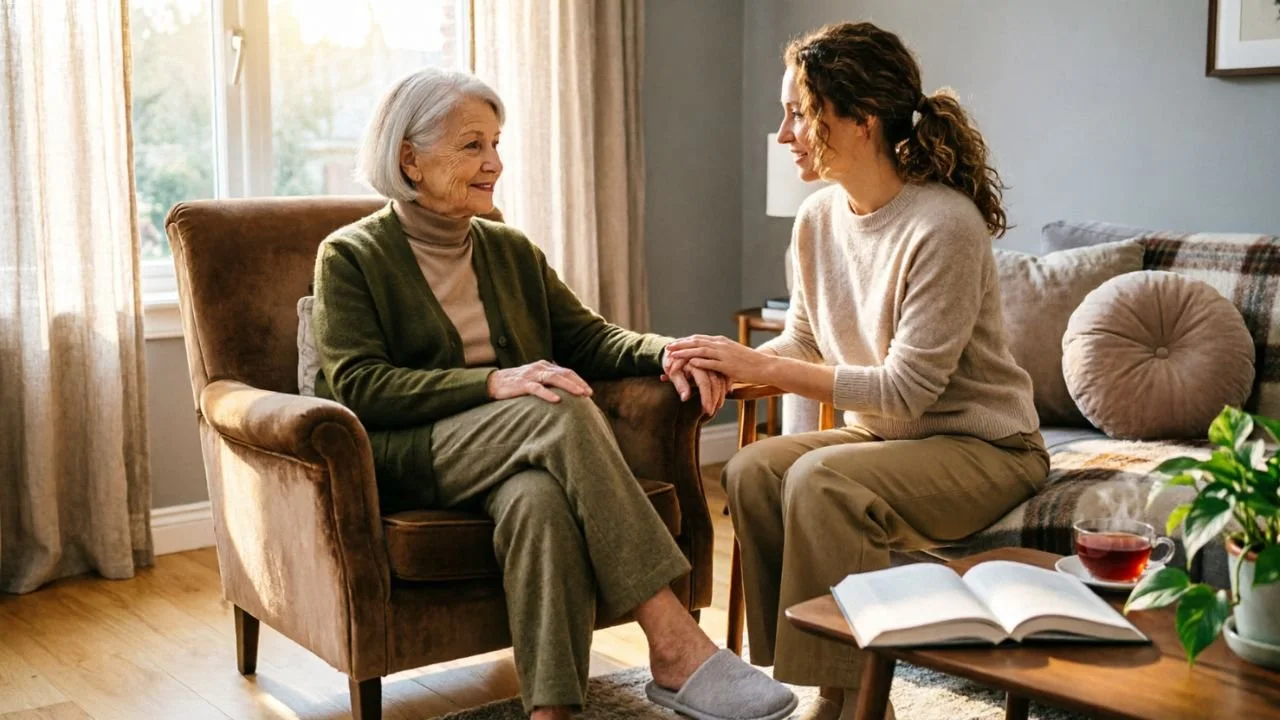
The desire to go home shows up most often in the middle, or moderate, stage of dementia, when confusion about time and place tends to deepen. But it isn't locked to that single stage. Someone in early stage dementia might say it during a stressful outing. Someone in late-stage dementia might not say it at all, yet still show it through pacing or restlessness. So the honest answer is this: wanting to go home is a symptom that can surface at nearly any point in the disease. It just tends to peak during the middle years, when disorientation is high, but the person is still mobile enough to act on it.
Why the "One Stage" Question Is a Bit of a Trap
It's a natural question to ask, especially when a parent or spouse says "I want to go home" while sitting in their own living room. Families search for a tidy answer because it feels like it should map neatly onto a stage chart. Here's the thing, though: dementia doesn't progress in a straight line, and neither do its symptoms.
Alzheimer's Society, one of the more trusted sources on this, has noted that this behavior isn't tied to just one stage of the disease. It can happen early, in the middle, or late, depending on the person's environment, their mood, and what's triggering the feeling in that moment.
Some clinical staging models, like the seven-level Global Deterioration Scale, associate the desire to go home with stage six, which sits in the moderate to severe range. Other frameworks, including the simpler early, middle, and late model most families are familiar with, place it squarely in the middle stage.
Honestly, both are right in a limited sense, and both miss the bigger picture. Staging tools measure cognitive and functional decline. Wanting to go home is a behavioral and emotional response layered on top of that decline, which is why it doesn't stay put on a single line of a chart the way memory loss or language trouble tends to.
How This Shows Up at Each Stage
| Stage | How Often It Appears | AppearsWhat It Typically Looks Like |
|---|---|---|
| Early (Mild) | Occasional | Brief moments of unease, usually during unfamiliar outings or after a stressful conversation. Often resolves with a little reassurance. |
| Middle (Moderate) | Most common | Frequent, sometimes daily. May include exit-seeking, pacing near doors, or asking to leave even while at home. Often worse in late afternoon or evening. |
| Late (Severe) | Less verbal, still present | Words may fade as language declines, but restlessness, agitation, or attempts to stand and walk away can still point to the same unmet need. |
A quick note on that table: these are patterns, not rules. Some people skip the early-stage version entirely and go straight into frequent requests once the moderate stage sets in. Others show mild versions of this behavior for years before it becomes a daily occurrence. Dementia progression varies enough from person to person that treating any stage chart as a strict timeline usually causes more worry than it resolves.
What's Actually Being Asked For
This is the part that surprises a lot of families. Dementia researchers and caregivers alike have observed that the "home" someone is asking for often isn't their current house, or even the last house they lived in. It's frequently tied to childhood, or to a period in life when they felt most secure.
Dementia damages the parts of the brain responsible for spatial and time orientation, so the present moment can start to feel foreign, even in a room they've lived in for twenty years. "Home," in that sense, becomes shorthand for safety, familiarity, and comfort rather than a literal address.
This overlaps closely with a related behavior called exit-seeking, where someone tries doors, paces near exits, or insists on leaving a building even though nothing is physically wrong.
Exit-seeking and wanting to go home often travel together, and both tend to climb during the moderate stage before tapering off in later stages as mobility and language decline. It's also worth noting this isn't unique to Alzheimer's disease. Vascular dementia and Lewy body dementia can produce similar longing for home, though the timing and intensity vary depending on which parts of the brain are most affected.
Common Triggers Behind "I Want to Go Home"
A few things tend to set this off, and recognizing them can make a real difference in how often it happens:
Sundowning, the late afternoon and evening spike in confusion and agitation common in dementia
Unfamiliar or overstimulating environments, like a crowded family gathering
Fatigue or hunger the person can no longer put into words
Pain or physical discomfort that shows up as restlessness instead of a direct complaint
Feeling bored, excluded, or unheard in the moment
A recent change in routine, caregiver, or living situation
Watching others leave, such as a caregiver's shift change or family members heading out after a visit
How to Respond in the Moment
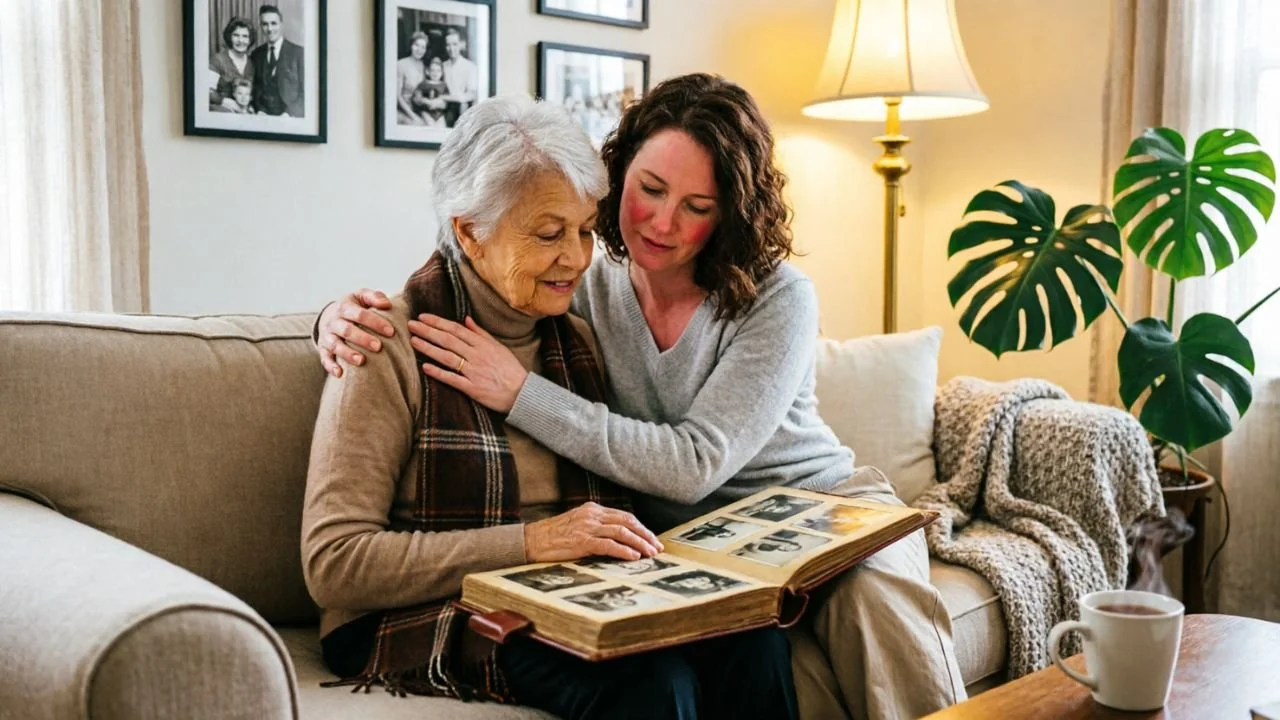
Correcting or arguing rarely helps and often makes the distress worse. A few approaches tend to work better:
Validate the feeling before addressing the words. "That sounds hard, tell me about home" often lands better than "You are home."
Avoid long explanations. Detailed reasoning is hard to process and can increase frustration.
Redirect gently toward a comforting activity, a photo album, a favorite song, a short walk.
Check the basics first. Hunger, thirst, pain, and the need for the bathroom often masquerade as wanting to leave.
Keep your tone calm and steady. Dementia patients pick up on emotional cues even when words are hard to follow.
Watch the clock. If the pattern clusters around late afternoon, treat it as likely sundowning and adjust lighting, noise, and activity levels earlier in the day rather than waiting for the distress to build.
When It Might Be Time for More Support
For a lot of families, this behavior is manageable for a while with patience and a few environmental adjustments. But when it starts happening daily, when it involves attempts to leave the house unsupervised, or when it's wearing down the primary caregiver, that's usually a sign the current setup needs a second look.
According to the Alzheimer's Association, roughly six in ten people living with dementia will wander at some point, and unsupervised wandering carries real safety risk, which is part of why this particular behavior gets so much attention from care teams.
These patterns often line up with some of the broader signs that it's time to move to assisted living gracefully, especially once daily wandering starts to outpace what one caregiver can safely manage alone.
Structured memory care communities are built around a lot of the things that ease this specific anxiety: predictable daily routines, secured layouts that prevent unsafe wandering, and staff trained to notice the early signs of agitation before it escalates into something harder to manage.
If you're noticing these patterns in a loved one and aren't sure what the next step should look like, a conversation with a memory care team can help clarify what your options actually are, no pressure attached.
Scheduling a tour is a low-pressure way to see that daily rhythm firsthand and ask specific questions about memory support.
Frequently Asked Questions
Is wanting to go home a sign of a specific stage of dementia?
No. It isn't limited to one stage. It shows up most often in the middle stage, but people in early and late stage dementia can express the same longing in different ways.
Why does someone with dementia ask to go home when they're already there?
Because "home" usually represents a feeling of safety from an earlier point in their life, not a literal address. Dementia affects memory and orientation, so a familiar place can feel unfamiliar in the moment.
What should you say when a loved one with dementia wants to go home?
Skip the arguing or correcting. Validate what they're feeling, offer reassurance that they're safe, and gently redirect their attention toward a comforting activity or memory.
Does the "I want to go home" behavior get worse over time?
It tends to intensify through the middle stage, often worse in late afternoon, then becomes less verbal in the late stage as language declines, though the underlying restlessness can still show up in other ways.