
11 Exercises for Balance Seniors Can Do at Home Without Equipment
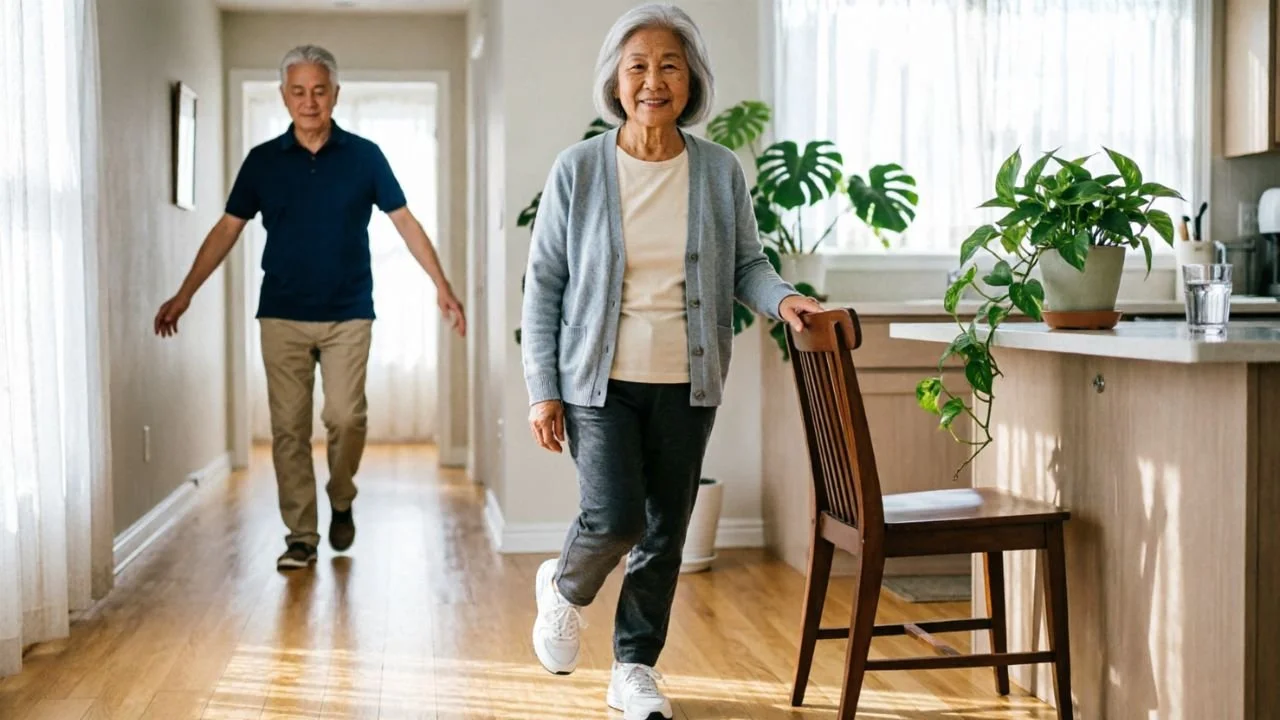
Quick answer: The best exercise for balance seniors can do without a gym, a trainer, or any equipment that starts with the body they already have. Standing holds, heel-to-toe walking, sit-to-stands, and side leg raises train the same muscles and reflexes that keep a person steady on stairs, in the shower, or walking to the mailbox, and every one of them can be practiced next to a kitchen counter or a sturdy chair.
Falls are one of the biggest health risks facing older adults, and most of them don't happen because someone was doing something reckless. They happen on a normal Tuesday, stepping off a curb, turning too fast in the kitchen, reaching for something on a shelf. The muscles and reflexes that catch a stumble weaken with age if they're not used, but here's the good news: they respond fast when they're trained again, even for people who haven't exercised in years.
Balance isn't just about strong legs, either. It's a mix of muscle strength, inner ear function, vision, and how quickly the nervous system reacts to a sudden shift in position. All four tend to slip a little with age, which is exactly why balance work looks different from a regular strength routine. The exercises below target that whole system, not just the legs, which is why even a few weeks of practice tends to show up in ways people notice right away, like feeling steadier getting out of the car or walking on grass.
Before starting, a quick safety note. Anyone with a history of falls, dizziness, or a recent injury should check with a doctor or physical therapist first. And for every exercise below, keep a sturdy chair, countertop, or wall within arm's reach. There's no prize for skipping the support. The goal is steadiness, not bravery.
For anyone who'd rather build this into a supervised routine instead of going it alone, structured options like the balance classes covered in this look at services assisted living communities provide beyond housing and meals are worth a look too.
Quick Overview: 11 Balance Exercises for Seniors
| Exercise | How Long or How Many | Mainly Trains |
|---|---|---|
| Feet-together stand | Hold 10-30 seconds | Static balance, core |
| Semi-tandem stand | Hold 10-30 seconds per side | Static balance, ankles |
| Tandem stance (heel-to-toe) | Hold 10-20 seconds | Balance, coordination |
| Single-leg stand | Hold 5-15 seconds per leg | Hip and ankle stability |
| Heel-to-toe walk | 10-15 steps | Dynamic balance, coordination |
| Standing marches | 10-15 reps per leg | Hip flexors, core |
| Sit-to-stand | 8-10 reps | Legs, glutes, functional strength |
| Side leg raises | 10 reps per leg | Hip stability |
| Calf raises | 10-15 reps | Ankle strength, stability |
| Weight shifts | 10 shifts per side | Balance reflexes |
| Forward toe taps | 15-20 taps per foot | Coordination, stepping confidence |
Now here's how to do each one.
1. Feet-Together Stand
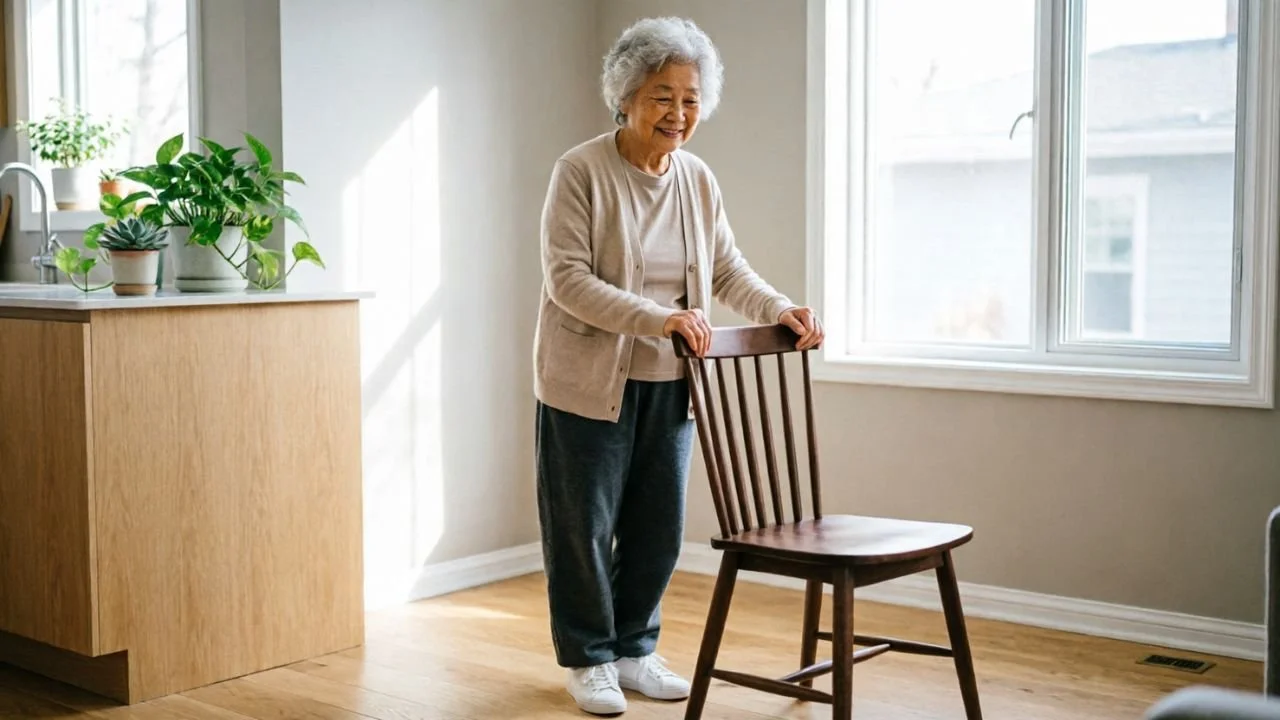
Stand with feet touching, hands resting lightly on a chair back if needed. Hold the position, breathing normally, and try to let go of the chair for a few seconds once it feels stable. Simple as it sounds, this is close to the same test physical therapists use to check baseline balance, so it's worth tracking the hold time over a few weeks to see real progress.
2. Semi-Tandem Stand
Place one foot slightly ahead so its arch lines up with the big toe of the other foot. Hold, then switch sides. It's a small shift from the feet-together stand, but it narrows the base of support just enough to make the core and hips work noticeably harder.
3. Tandem Stance (Heel-to-Toe Standing)
Line up one foot directly in front of the other, heel touching toes, like standing on a balance beam. This one's tougher than it looks, honestly, and that's exactly why it's useful. Hold near a counter at first, and don't be discouraged if the first attempts only last a couple seconds.
4. Single-Leg Stand
Lift one foot a few inches off the floor and hold. Even five seconds counts, genuinely. Over weeks, the hold time tends to climb on its own without forcing it, and most people notice one leg is stronger than the other, which is completely normal and worth working on evenly.
5. Heel-to-Toe Walk
Walk in a straight line, placing the heel of one foot directly in front of the toes of the other, step after step, arms out for balance if needed. It mimics the coordination needed for narrow spaces like hallways or bathrooms, so the payoff shows up in daily life fast.
6. Standing Marches
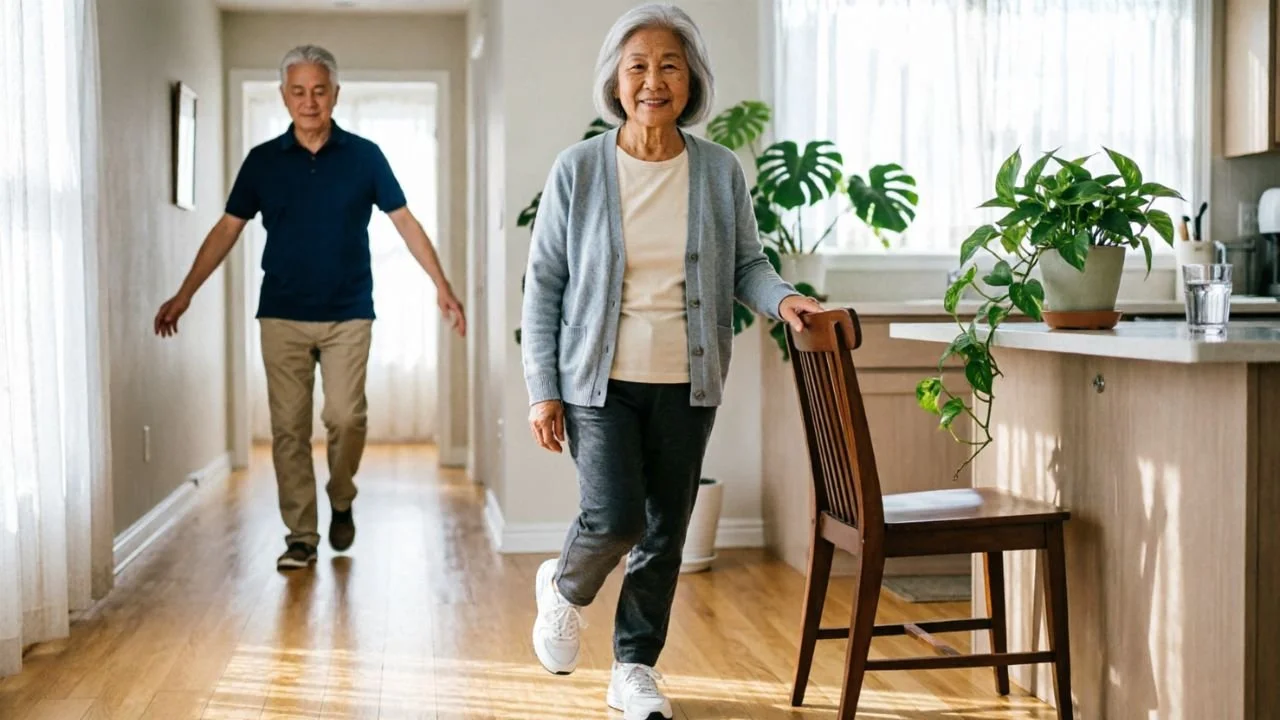
March in place, lifting the knees toward hip height, one hand on the counter if needed. This one doubles as light cardio and works the hip flexors that get weak from too much sitting, which is nearly everyone at some point.
7. Sit-to-Stand
Sit near the front of a sturdy chair, lean slightly forward from the hips, and stand up without using the hands if possible. Lower back down with control instead of dropping. This single movement is one of the strongest predictors of fall risk out there, which is honestly a little wild for something this simple.
8. Side Leg Raises
Holding onto a counter, lift one leg straight out to the side, then lower it slowly. Keep the torso upright instead of leaning into the movement. This targets the hip muscles that stabilize every step, every turn, and every time someone catches themselves mid-stumble.
9. Calf Raises
Rise up onto the toes, hold for a beat, then lower slowly and with control. Ankle strength gets overlooked constantly, but weak ankles are one of the most common, and most fixable, reasons balance slips as people age.
10. Weight Shifts
Standing with feet hip-width apart, shift weight slowly onto one foot, then the other, without lifting either foot off the ground. It feels almost too easy at first, but it trains the automatic reflexes that kick in during a real stumble, which is exactly what makes it valuable.
11. Forward Toe Taps
Standing behind a chair for support, tap one foot forward on the floor, return it, then switch feet. Keep the taps slow and controlled rather than rushed. This builds the stepping confidence that matters most on uneven ground, like a driveway, a curb, or a grassy yard.
Consistency Matters More Than Intensity
None of these exercises need to happen all at once or every single day. Most physical therapists suggest three to five short sessions a week, ten to fifteen minutes each, is enough to see real change within a matter of weeks. Skipping a day here and there won't undo the progress. What actually undoes progress is stopping altogether for months at a time, which is a pattern worth watching for, especially after an illness or a busy stretch of life gets in the way.
Communities that build wellness programming around this same principle, short, frequent sessions rather than occasional long workouts, tend to see steadier results among residents. Keystone Bluffs runs balance-focused classes as part of its regular activity calendar, alongside chair yoga and guided stretching, so residents get this kind of practice built into the week rather than left to remember on their own.
FAQs
How often should seniors do balance exercises?
Most experts recommend three to five sessions a week, around ten to fifteen minutes each. Consistency matters more than long sessions, and daily short practice tends to work better than occasional hour-long ones.
Is it safe for seniors to do balance exercises without supervision?
For most healthy older adults, yes, as long as a sturdy chair or counter is nearby for support. Anyone with a history of falls, vertigo, or a recent surgery should check with a doctor or physical therapist before starting.
How long does it take to see improvement in balance?
Many people notice better confidence and steadiness within four to six weeks of consistent practice. Measurable reductions in fall risk typically show up closer to eight to twelve weeks.
What if a senior can't stand without support?
Several of these exercises, including weight shifts, calf raises, and seated marching, can be modified to be done while holding onto a counter with both hands or even seated, and still offer real benefit.