
Can You Bring Your Own Dentist to Assisted Living, or Does the Facility Assign One?
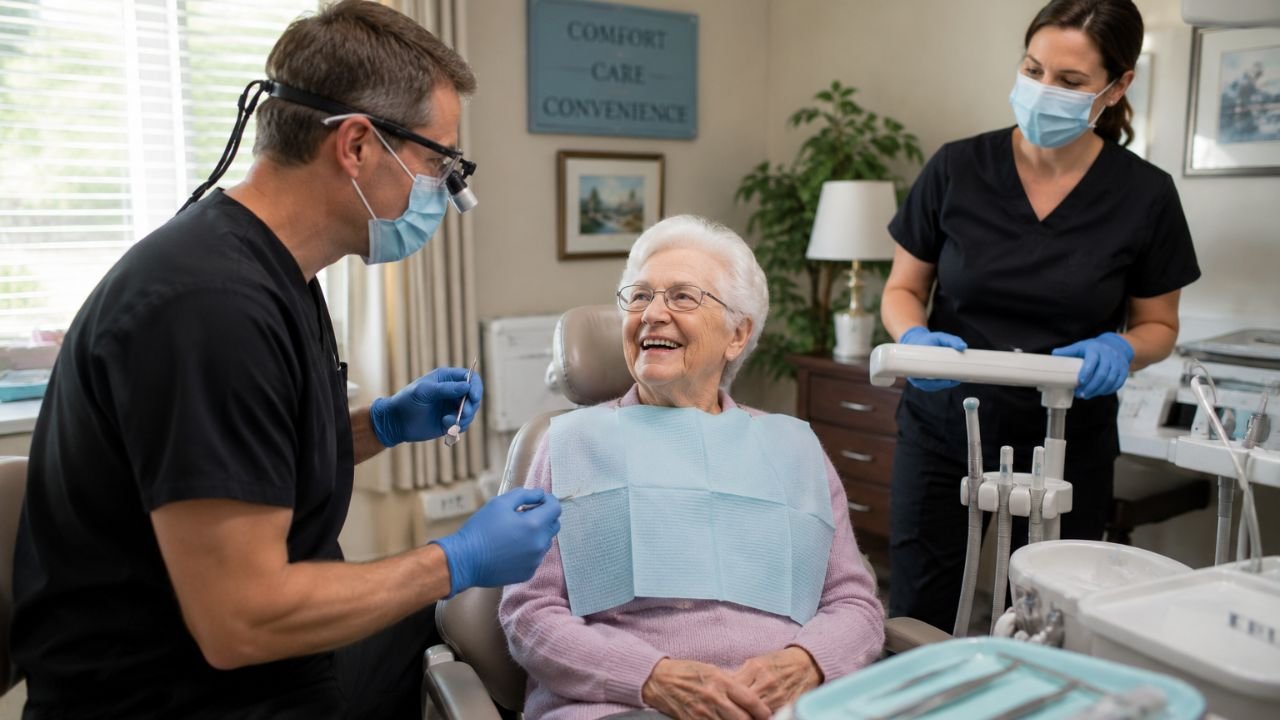
The short answer: Yes, in most cases, residents can bring their own dentist to an assisted living facility. Most states protect the right to choose personal healthcare providers, including dentists. Facilities may offer in-house dental services or have a preferred provider, but they generally cannot force residents to use them exclusively.
Now for the longer answer.
Why This Question Comes Up More Than People Expect
Here's the thing. When families start exploring assisted living for a parent or loved one, dental care is rarely the first topic on the list. Everyone focuses on room quality, meal plans, and nursing staff ratios. Dental care? It barely gets a mention during the facility tour.
But then reality hits. Mom has been seeing the same dentist for 12 years. That dentist knows her anxiety triggers, her crown history, and her gum sensitivity. Switching providers feels wrong. And honestly? It often is wrong. Continuity of care matters in dentistry more than most people realize, especially for older adults managing multiple health conditions.
So the question becomes urgent fast. Can you actually keep that relationship intact?
What the Law Says About Choosing a Dentist in Assisted Living
Assisted living is regulated at the state level, not the federal level. That is a critical distinction. Unlike nursing homes, which must meet federal quality standards through Medicare and Medicaid, assisted living facilities answer primarily to state licensing agencies.
But here's what stays consistent across nearly every state:
Residents have the right to choose their own physician. In Arizona, for example, residents have the right to select their own doctor and pharmacy. Most states extend this to dental providers as well.
Residents can contract with outside licensed healthcare providers. In Florida, a resident can contract with a licensed home health care provider for nursing and other health care services.
Facilities cannot strip civil rights upon admission. Under Section 429.28 of Florida Statutes, no resident of a facility shall be deprived of any civil or legal rights, benefits, or privileges guaranteed by law.
In New York, nursing homes must respond promptly to requests from a resident's personal attending dentist. That includes approving visits from outside dental professionals.
The bottom line: most assisted living communities in the U.S. cannot legally prevent a resident from seeing their own dentist. They can offer a facility dentist. They can recommend one. But force it? No.
How Facility Dental Programs Typically Work
Most assisted living facilities do not have a dentist on staff full-time. Assisted living facilities differ from nursing homes or skilled nursing facilities in that they typically do not have doctors on staff around the clock.
Instead, the typical setup looks something like this:
Dental Care Model: Facility's Preferred Dentist
How It Works: A mobile dental provider visits the facility on a scheduled rotation (monthly or quarterly)
Who Pays: Resident's insurance or out of pocket
Dental Care Model: On-Site Dental Clinic
How It Works: Larger facilities may have a small dental suite with visiting practitioners
Who Pays: Resident's insurance or out of pocket
Dental Care Model: Resident's Personal Dentist
How It Works: Resident travels to their own dentist's office or arranges mobile visits
Who Pays: Resident's insurance or out of pocket
Dental Care Model: Mobile/House Call Dentist
How It Works: Independent mobile dentists bring portable equipment directly to the resident
Who Pays: Resident's insurance or out of pocket
Notice something? In every scenario, the resident (or their family) typically pays. Dental care is almost never included in assisted living base fees.
Dental access is just one piece of the amenities puzzle. Facilities vary widely in what they offer beyond basic care, so it helps to understand which assisted living amenities matter most for active seniors before making a decision.
The Medicare Problem Not Talked About Enough
This is where things get frustrating. Original Medicare has a very limited role when it comes to dental care. Federal law under Section 1862(a)(12) of the Social Security Act explicitly excludes coverage for most dental services.
So routine cleanings, fillings, dentures, extractions? All out of pocket under Original Medicare.
More than half of Medicare beneficiaries now choose Medicare Advantage plans, and over 90 percent of those plans offer additional dental benefits. But the coverage varies wildly. Some plans cover two cleanings a year and nothing else. Others include major procedures. Reading the fine print is not optional here.
For families evaluating assisted living, understanding the dental cost picture before signing anything is essential. Ask the facility what their dental partner charges. Compare that to what the resident's current dentist bills. Sometimes the in-house option is cheaper. Sometimes it is significantly more expensive.
When Bringing a Personal Dentist Makes the Most Sense
Not every situation calls for keeping an outside dentist. But several scenarios make it the clearly better choice:
Complex dental history. If the resident has implants, ongoing periodontal treatment, or partial dentures that need regular adjustment, continuity matters.
Cognitive decline. For residents with Alzheimer's or dementia, familiarity with a provider reduces anxiety. A stranger poking around in their mouth? That can trigger real distress.
Specialized needs. Some older adults need sedation dentistry or have medical conditions (blood thinners, diabetes) that require a dentist experienced with their specific profile.
Trust. This one is simple, but it is real. If a resident trusts their dentist, that relationship directly impacts whether they actually agree to receive care.
The Rise of Mobile Dentistry for Seniors
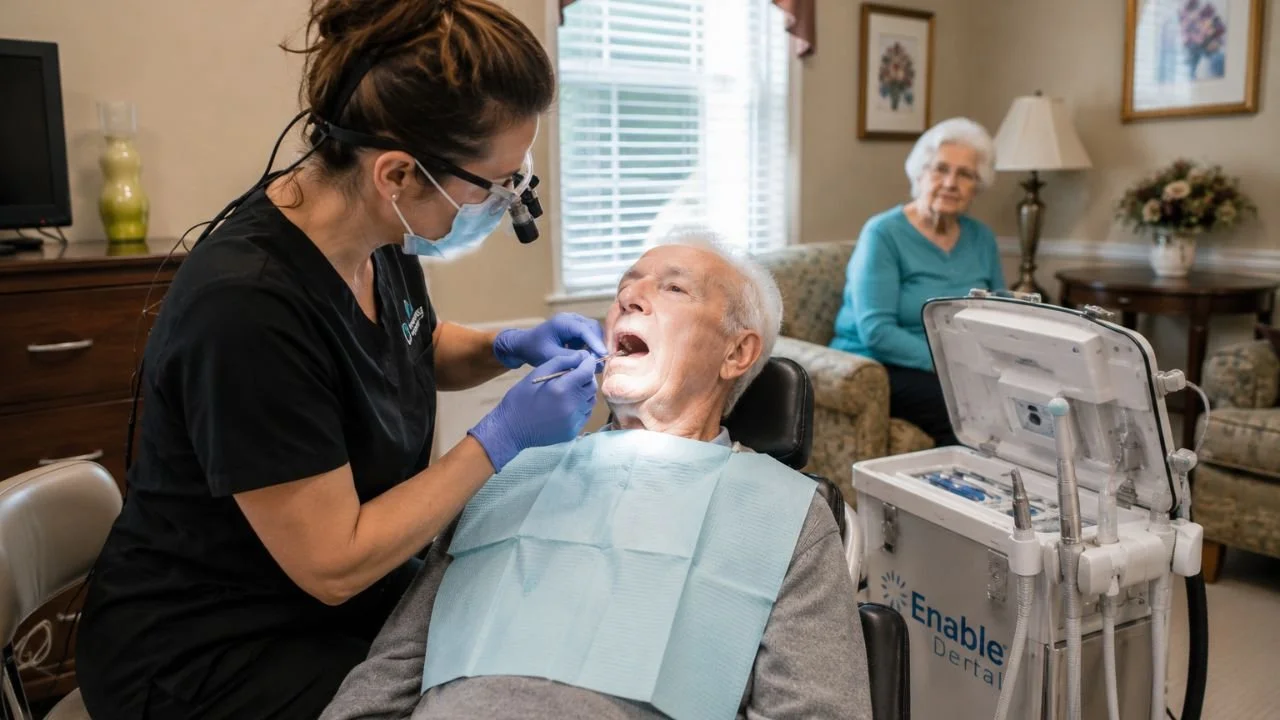
One option that has grown rapidly is mobile dentistry. Mobile dental providers can perform diagnostics, exams, oral cancer screenings, cleanings, fluoride treatments, denture repairs, fillings, and most extractions directly in the facility.
Companies like Enable Dental are now trusted by over 1,100 senior living communities as preferred on-site dental providers, serving patients in assisted living, memory care, independent living, and skilled nursing facilities.
Other providers like Dental Home Services partner with over 350 assisted living facilities, bringing mobile dental carts with sterilized equipment to deliver a wide range of services.
For families in South Florida (and honestly, across the country), mobile dentistry solves a real logistical headache. No need to arrange transportation. No waiting rooms. No weather delays.
Questions to Ask Before Moving Into Assisted Living
Before signing any agreement, families should ask the facility these specific questions about dental care:
Does the facility have an in-house or preferred dental provider?
Is the resident required to use that provider, or is it optional?
Can an outside dentist visit the resident at the facility?
Are there any restrictions on scheduling outside provider visits?
Does the monthly fee include any dental services, or is everything billed separately?
What happens in a dental emergency after hours?
Getting clear answers upfront prevents surprises later. And "we'll figure it out" is not an acceptable answer from facility staff.
Dental care is one of dozens of details families need to sort through before a transition. If the conversation about assisted living hasn't happened yet, our guide on when to start talking to parents about assisted living before a crisis happens can help families approach it the right way.
Why This Matters for Families Planning Ahead in South Florida
South Florida is one of the largest retirement and senior living hubs in the entire country. Families relocating aging parents to the Miami area juggle a hundred decisions at once. Housing. Healthcare. Social connection. Transportation to appointments. Dental care might seem small in that picture, but poor oral health in seniors is linked to heart disease, pneumonia, and malnutrition. It is anything but small.
Knowing that a loved one can keep their trusted dentist (or find a great mobile provider who comes to them) removes one major source of stress from an already stressful transition.
FAQs
Q: Can an assisted living facility force a resident to use their in-house dentist?
No. Most state laws protect the right to choose personal healthcare providers. Facilities may recommend or offer a preferred dentist, but residents are not legally required to use them. If a facility insists otherwise, contact the state's Long-Term Care Ombudsman program.
Q: Does Medicare cover dental visits for assisted living residents?
Original Medicare does not cover routine dental care like cleanings, fillings, or dentures. Medicare Advantage plans often include some dental benefits, but coverage varies by plan. Residents should review their specific plan details or consider standalone dental insurance.
Q: What is mobile dentistry, and can it be used in assisted living?
Mobile dentistry involves licensed dental professionals who travel to the patient's location with portable equipment. They can perform exams, cleanings, X-rays, fillings, and even extractions on-site at assisted living facilities. Many communities already partner with mobile dental providers.
Q: How do families find a good dentist for a loved one in assisted living?
Start by asking the facility for a list of dental providers who already serve their residents. Check whether the resident's current dentist makes house calls or has experience with geriatric patients. State dental associations also maintain directories of mobile and geriatric dental providers.