
10 Activities for Seniors With Limited Mobility That Don't Feel Like a Compromise
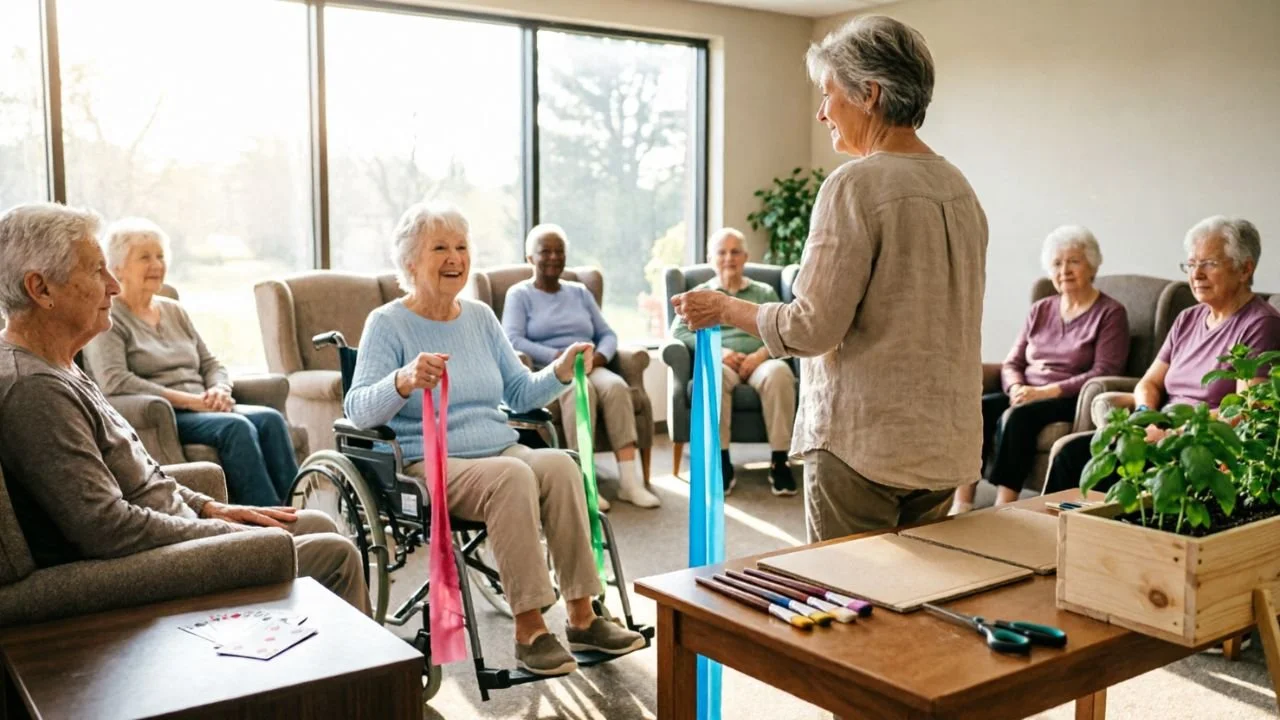
Quick answer: The best activities for seniors with limited mobility work with the body, not against it. Chair yoga, adaptive gardening, water aerobics, tabletop games, music therapy, arts and crafts, resistance band exercises, guided storytelling, virtual reality experiences, and simple tech-assisted hobbies all let older adults stay active, social, and mentally sharp without needing full range of motion or a lot of standing and walking.
Losing mobility doesn't mean losing interest in life. But a lot of activity lists aimed at seniors still assume everyone can stand for twenty minutes, grip a paintbrush with steady hands, or walk a full lap around a garden. For someone managing arthritis, a stroke recovery, Parkinson's, or just the slower joints that come with getting older, those lists can feel like a reminder of what's gone rather than an invitation to try something new.
That's the wrong way to think about it, honestly. The activities below were chosen because they scale to different ability levels, they don't require perfect fine motor control or standing balance, and most of them can happen seated, in a wheelchair, or with minimal assistance. None of them are lesser versions of a real hobby. They're just built differently.
Families weighing how much accessibility really matters day to day can get a clearer picture in this guide on evaluating mobility assistance in assisted living, which breaks down what genuine wheelchair-friendly design looks like beyond the brochure.
Quick Overview: Activities for Seniors With Limited Mobility
| Activity | Mobility Level Needed | Why It Works |
|---|---|---|
| Chair yoga | Seated, minimal | Builds flexibility and calm without standing poses |
| Adaptive gardening | Seated or standing with support | Sensory engagement, low strain on joints |
| Water aerobics | Assisted entry, low-impact | Water supports body weight, reduces fall risk |
| Tabletop games & cards | Seated | Keeps hands and mind engaged, social by design |
| Music therapy | Any level | No physical requirement, strong mood benefits |
| Arts and crafts | Seated, adaptive grips available | Creative outlet, works around hand limitations |
| Resistance bands | Seated or standing | Builds strength gradually, low equipment need |
| Storytelling circles | Any level | Purely conversational, no physical demand |
| VR travel experiences | Seated | Immersive without leaving a chair |
| Tech-assisted hobbies | Any level | Connects seniors to family, learning, and games |
Now let's go through them one by one.
1. Chair Yoga and Guided Stretching

Chair yoga takes the poses people already know, or have heard of, and adapts them to a seated position. Instructors guide gentle stretches, breathing work, and light strengthening moves that improve flexibility and circulation without asking anyone to balance on one leg. Many senior communities run chair yoga sessions in small groups, which turns a solo stretch routine into a social hour too.
2. Adaptive and Raised-Bed Gardening
Traditional gardening asks a lot of the knees and back. Raised planter beds, railing-height pots, and long-handled tools fix that. Seniors can dig, plant, and water without bending, and indoor herb gardens work just as well for anyone who mostly stays in a chair or uses a walker. The payoff isn't just a tomato plant, it's the routine of checking on something living and watching it change week to week.
3. Water Aerobics or Aquatic Therapy
Water takes weight off the joints, which makes it one of the safer ways for a senior with limited mobility to build strength and cardiovascular fitness. Pool sessions designed for older adults usually stay in shallow water, with rails and steps nearby, and movements are slow and controlled. It's exercise that doesn't feel like exercise, and for people who've written off working out entirely, that reframing matters.
4. Tabletop Games and Card Clubs
Bridge, rummy, dominoes, bingo, whatever the group prefers, tabletop games ask nothing of the legs and very little of the hands. They do ask for attention, strategy, and a bit of friendly competition, which is exactly the kind of mental engagement that keeps minds sharp. A regular card club also gives people something to look forward to on the calendar, which matters more than it sounds like it should.
5. Music Therapy, Sing-Alongs, and Simple Instruments
Music doesn't require standing, walking, or steady hands, and it reaches people who might not respond to much else, including those living with dementia. Group sing-alongs, hand drums, shaker eggs, or just listening to a favorite decade of music can lift mood in a way few other activities can match. Some communities bring in music therapists specifically trained to work with older adults with cognitive or physical limitations.
It's one piece of a much wider wellness picture, covered in more depth in this rundown of services assisted living communities provide beyond housing and meals.
6. Arts and Crafts With Adaptive Tools
Painting, drawing, knitting, and collage work all scale down to whatever grip and range of motion someone has. Built-up foam grips on paintbrushes, weighted pens, and looped knitting needles let seniors with arthritis or tremor keep making things with their hands. The finished piece matters less than the process, honestly: the concentration, the color choices, the small decisions that come with making something from nothing.
7. Resistance Band Exercises
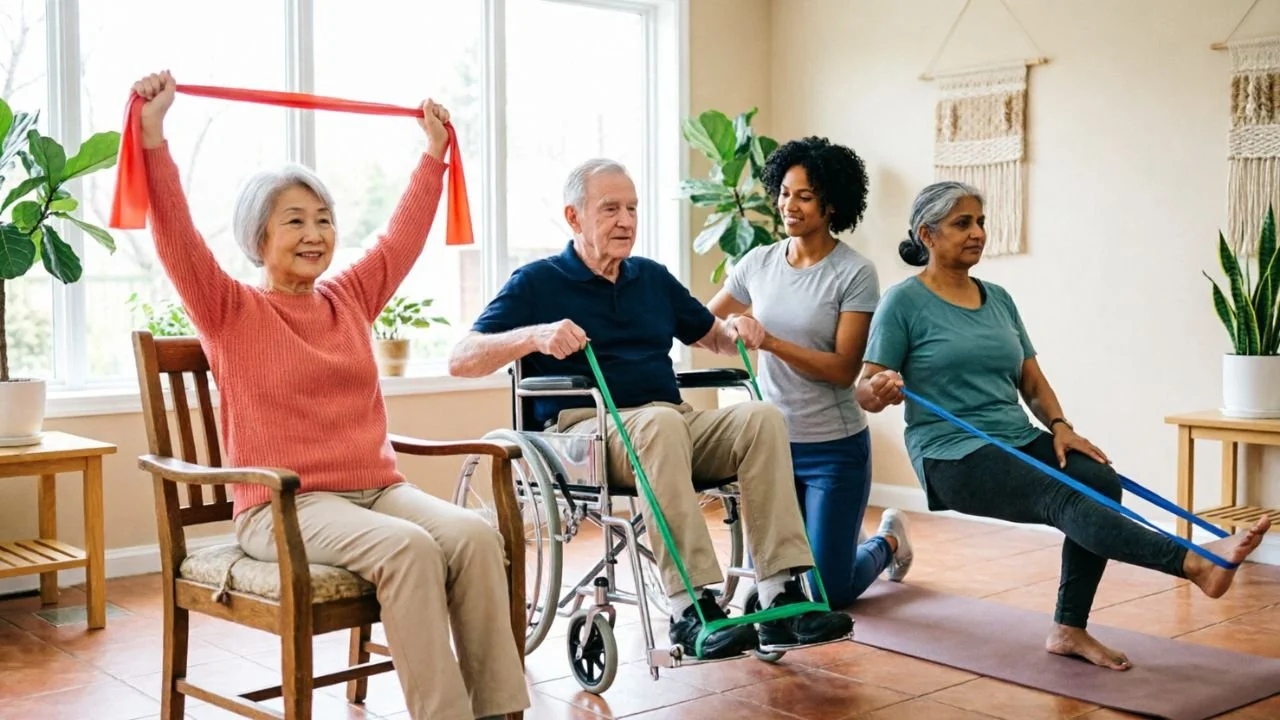
A resistance band costs a few dollars, weighs almost nothing, and can be used from a wheelchair, a regular chair, or lying down. Slow, seated resistance work builds strength in the arms, shoulders, and legs, which directly supports balance and everyday tasks like standing up from a chair. It's one of the most practical entries on this list because the strength gains show up in daily life almost immediately.
8. Storytelling and Memoir Circles
Ask a senior to talk about the year they got married, or the job they hated, or the road trip that went wrong, and watch what happens. Storytelling groups give people a reason to organize their memories and share them, which supports both cognitive health and a sense of being genuinely heard. Some groups turn these sessions into written memoirs that families keep for years afterward.
9. Virtual Reality Travel and Exploration
This one's newer, but it's catching on fast in senior communities. VR headsets can take a seated resident to the Eiffel Tower, the Grand Canyon, or their childhood hometown streets, all without leaving the chair. For someone who can no longer travel or even walk long hallways, that kind of immersive experience opens up a world that mobility limits had quietly closed off.
10. Technology-Assisted Hobbies
Tablets loaded with senior-friendly apps, video calls with grandkids, digital puzzles, and wearable devices that track activity and remind residents about routines all count as legitimate hobbies now, not just conveniences. Learning to use a tablet is itself a form of mental engagement, and staying connected to family through video calls does more for emotional wellbeing than most formal activities on a calendar.
Why the Word "Compromise" Doesn't Belong Here
Calling these activities a downgrade from what someone used to do misses the point entirely. A woman who can no longer hike can still garden. A man who can't grip a golf club can still play cards with the same competitive streak he's had for sixty years. The activity changes, but the person underneath it doesn't.
Communities that build daily programming around this idea, rotating physical, creative, and social options so residents can choose what fits their day, tend to see higher participation and better moods across the board. At Keystone Bluffs, for example, the entire community sits on one floor specifically so residents can move between activity rooms, courtyards, and common spaces without navigating stairs or long distances, and the daily activity calendar is built with exactly this range of ability levels in mind.
FAQs
What counts as "limited mobility" in older adults?
Limited mobility covers a wide range, from needing a cane or walker to being wheelchair-dependent or managing chronic pain that limits standing and walking. Activities should be chosen based on the individual's actual ability, not assumptions.
Can seniors with limited mobility still exercise safely?
Yes. Seated exercises, resistance bands, and water-based workouts are widely used and considered safe for most seniors, though anyone starting a new activity should check with a doctor or physical therapist first.
How do I encourage a parent or loved one to try new activities without pushing too hard?
Start small and let them choose. Offering two or three options rather than a single suggestion tends to work better, and joining in yourself, even briefly, lowers the pressure.
What if a senior uses a wheelchair full time?
Nearly everything on this list (chair yoga, arts and crafts, music, tabletop games, storytelling, and tech-assisted hobbies) works fully seated and requires no transfer out of a wheelchair.