
Does Medicare Cover Occupational Therapy for Seniors in Assisted Living?
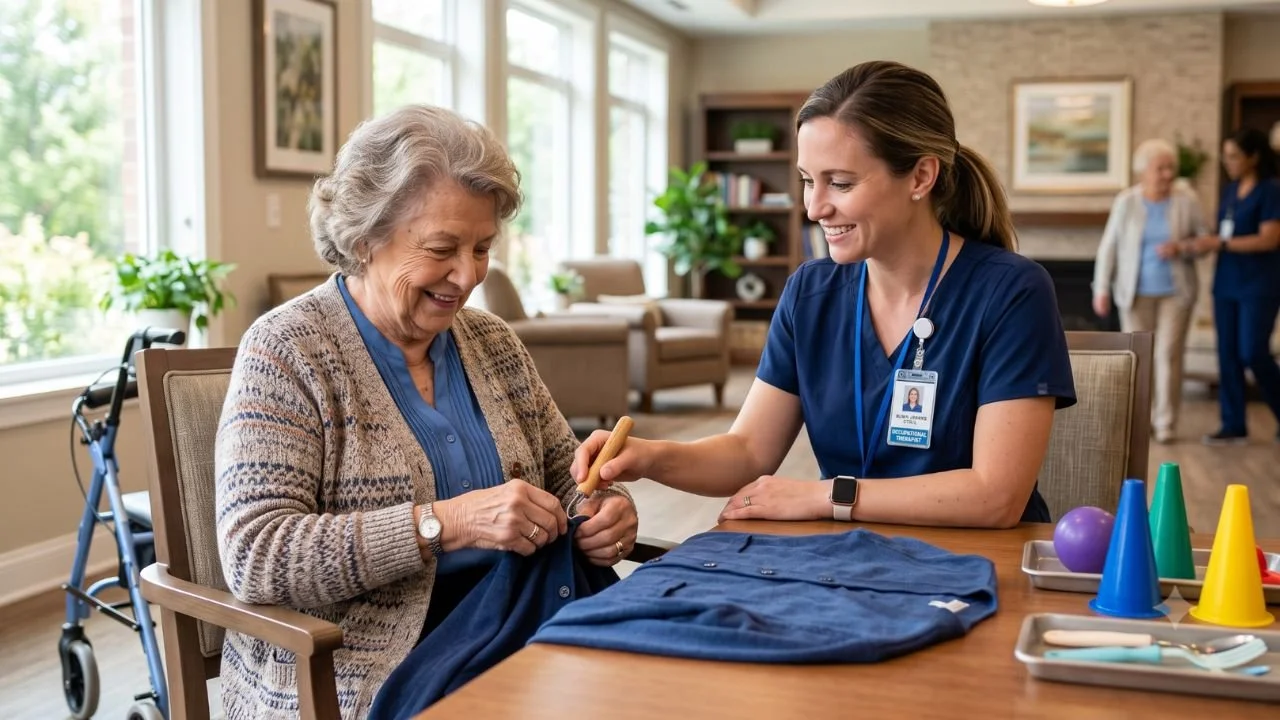
Short answer: yes. Medicare does cover occupational therapy for seniors in assisted living. But it covers the therapy itself, not the facility. That's a key point most families miss. Medicare Part B pays for outpatient OT when a doctor says it's needed. Part A covers it during hospital or skilled nursing stays. And Medicare Advantage (Part C) must cover at least the same.
But coverage comes with rules. Copays apply. Prior approval may be needed. Not every type of help counts as "OT" in Medicare's eyes. So before banking on full coverage, families need to know what's in and what's out.
This guide breaks it down with real 2026 numbers.
What Is Occupational Therapy for Seniors?
Occupational therapy for seniors is the branch of care that keeps daily life possible. Not the big stuff like surgery. The small stuff. Getting dressed. Holding a fork. Stepping into a shower safely. These are called Activities of Daily Living, or ADLs.
An OT works with a senior to build, rebuild, or hold on to the skills that make those tasks work. After a fall, a stroke, or even just gradual decline, basic things get harder. OT steps in right there. It might mean hand exercises to grip a zipper. It could be learning to use a grab bar the right way. Sometimes it's memory training to keep a routine on track.
Here's what makes OT different from physical therapy: PT focuses on movement and strength. OT focuses on function. Can this person get through a morning on their own? That's the OT question. And for seniors in assisted living, it's one of the most practical therapies out there.
How Medicare Part A Covers OT
Part A kicks in during inpatient stays. That means hospitals and skilled nursing facilities, not assisted living directly. If a senior is admitted to a hospital and needs OT as part of recovery, Part A covers it.
After a qualifying hospital stay of at least 3 days, Part A also covers OT in a skilled nursing facility. Here's what the 2026 cost split looks like:
Days 1 to 20: Covered in full after the $1,736 deductible
Days 21 to 100: $217 per day copay
After day 100: Medicare stops paying
So Part A has a hard limit. Once a senior moves to assisted living, Part A no longer applies for OT. That's where Part B takes over.
How Medicare Part B Covers OT in Assisted Living
This is where most seniors in assisted living get their OT covered. Part B is outpatient coverage. It pays for occupational therapy for seniors as long as a doctor or other provider certifies it's needed. The senior doesn't need to be in a hospital. They don't need a prior inpatient stay. They just need a medical reason and a doctor's order.
Here's what Part B looks like in 2026:
Monthly premium: $202.90
Annual deductible: $283
After the deductible: Medicare pays 80%, the senior pays 20%
And there's no hard cap on sessions per year. That changed back in 2018 when Congress removed the old therapy dollar caps. Now, once a senior's total OT costs pass $2,480 in 2026, the therapist adds a KX modifier to the claim. That just tells Medicare, "this care is still needed." It's not a cutoff. It's a checkpoint.
One thing to watch: the 20% copay adds up. A Medigap plan can cover that portion. Some do, some don't. Families should check the plan's details before assuming they're covered.
What About Medicare Advantage (Part C)?
Medicare Advantage plans are required to cover everything Original Medicare covers. That includes OT. But they layer on their own rules. Copays might differ. Networks are tighter. And many Part C plans need prior approval before therapy starts.
In 2026, CMS tightened the rules on prior approval timelines. Plans now must respond to standard requests within 7 calendar days. Urgent ones get 72 hours. If a plan denies OT, it has to give a specific reason.
Some Medicare Advantage plans also offer extra benefits that Original Medicare doesn't. Things like meal delivery, transport to therapy, or in-home aide visits. These vary a lot by plan and by region. Families in Minnesota should compare plans carefully. Not every Part C plan works the same way.
2026 Medicare OT Costs at a Glance
| Coverage Type | What It Covers | Senior's Cost (2026) |
|---|---|---|
| Part A (inpatient) | OT during hospital or SNF stay | $1,736 deductible, then $0 for days 1-20, $217/day for days 21-100 |
| Part B (outpatient) | OT in assisted living, clinics, home | $283 deductible, then 20% of approved cost |
| Part C (Medicare Advantage) | Same as Part A + B, possibly more | Varies by plan. Check copays and network rules |
| Medigap | Helps cover Part B copay gap | Depends on the specific Medigap plan |
What Medicare Does NOT Cover in Assisted Living
This part trips families up. Medicare does not pay for assisted living itself. Not the room. Not the meals. Not the help with daily routines that staff provide. It covers medical care that happens to take place in an assisted living setting. There's a big gap between "living there" and "getting therapy there."
So if a senior lives in assisted living and gets OT from a certified therapist with a doctor's order, Medicare Part B covers the therapy.
But the monthly cost of the community? That's on the family. Assisted living communities providefar more than a room and meals, and knowing what's included helps families plan the financial picture clearly. Other funding sources like Medicaid waivers, VA benefits, or long-term care insurance might help fill that gap.
Also worth noting: Medicare doesn't cover OT for general wellness or prevention alone. There has to be a diagnosis or a medical need. "Keeping active" isn't enough on its own. A fall risk assessment, a post-surgery recovery plan, or a cognitive decline diagnosis? Those count.
Why Occupational Therapy Matters in Assisted Living
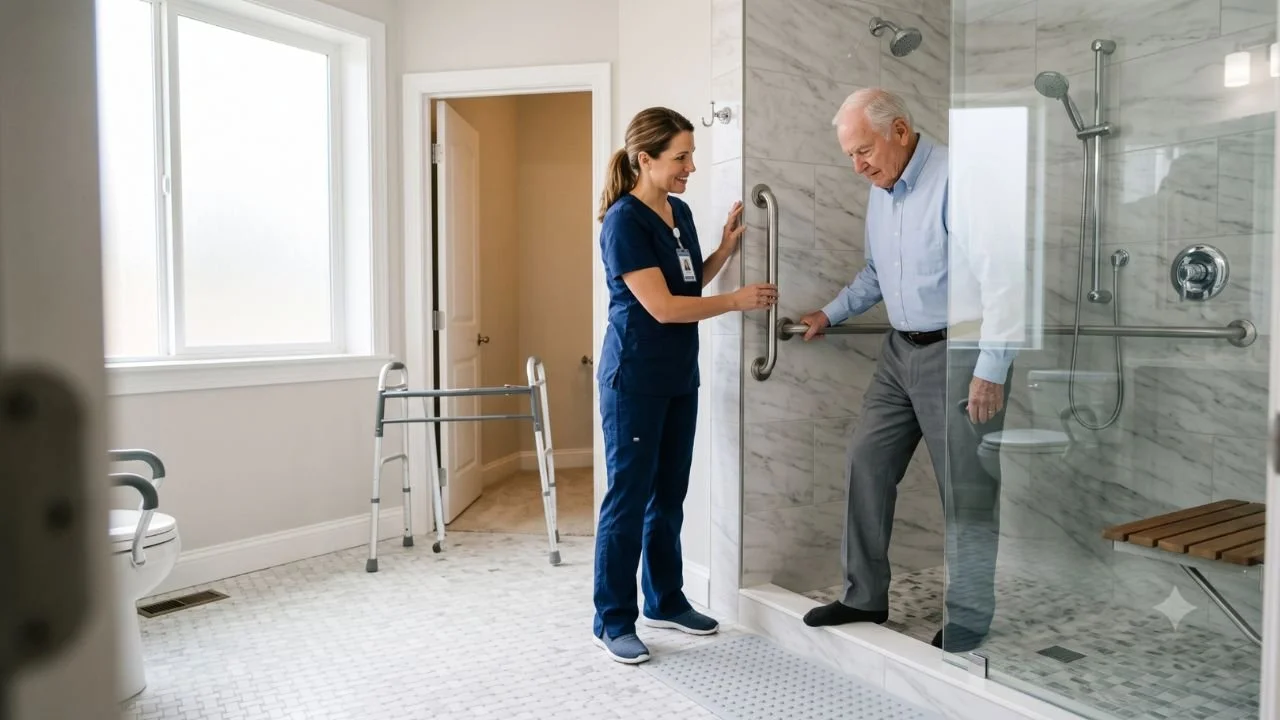
Why does this matter so much for seniors in assisted living? Because the goal of OT lines up perfectly with what assisted living tries to do. Both focus on keeping people as independent as possible. As safe as possible. As involved in their own daily lives as possible. When daily tasks like dressing or cooking start slipping, those are often the firstsigns it might be time for assisted living.
Occupational therapy for seniors in an assisted living setting can help with:
Fall prevention: OT assesses balance, teaches safer movement patterns, and recommends grab bars or walkers
Cognitive support: Memory exercises, routine building, and task planning for seniors with early-stage decline
ADL training: Relearning how to dress, eat, or bathe after a stroke or injury
Adaptive tools: Things like button hooks, long-handled shoehorns, or built-up utensil grips
Pain management: Joint protection techniques for arthritis, posture correction, energy-saving methods
When a community like Keystone Bluffs coordinates healthcare for residents, it's easier to build OT into the care plan. The therapist, the care team, and the family all stay on the same page. That kind of setup cuts gaps in care. Seniors don't fall through the cracks.
And here's a practical point families should know: occupational therapy for seniors doesn't have to mean long-term weekly sessions. Sometimes a few targeted visits after a fall or a surgery make a huge difference. Other times, ongoing sessions help slow decline from conditions like Parkinson's or dementia. Medicare covers both paths, as long as the need is documented.
FAQs
1. Does Medicare pay for occupational therapy in assisted living?
Yes. Medicare Part B covers outpatient occupational therapy for seniors in assisted living when a doctor certifies it as needed. The senior pays 20% after the $283 annual deductible (2026 rates). Medicare does not pay for the assisted living facility itself.
2. Is there a limit on how many OT sessions Medicare covers?
No hard cap. Congress removed the old therapy dollar caps in 2018. But once costs pass $2,480 in 2026, the therapist must confirm that care is still needed through a KX modifier code. Medicare can also flag high-cost claims for review.
3. What's the difference between occupational therapy and physical therapy for seniors?
Physical therapy focuses on movement, strength, and mobility. Occupational therapy focuses on daily function. Can a senior get dressed, eat a meal, or take a shower safely? OT addresses those tasks. Both are covered by Medicare, but they serve different goals.
4. Can a senior in assisted living get OT at home or only at a clinic?
Both. Medicare Part B covers OT in outpatient clinics, hospital outpatient departments, and through home health agencies if the senior qualifies as homebound. In assisted living, outpatient OT is the most common setup.