
What Essential Mobility Aids for Seniors Keep Independence in Assisted Living Daily Life?
Here's what most people don't understand about mobility aids: they're not admissions of defeat. They're tools that let seniors keep doing what matters to them. Walk to dinner without exhausting themselves. Attend morning exercise classes. Visit friends down the hall. Move through their days with confidence instead of fear.
The conversation about mobility aids for seniors usually starts after a fall or a close call. Someone's balance isn't what it used to be. Legs get tired halfway to the dining room. Getting up from a chair takes three tries instead of one. These changes happen gradually, then suddenly they're impossible to ignore.
Choosing the right mobility support isn't about giving in to limitations. It's about refusing to let physical challenges steal independence. In assisted living communities, residents with appropriate equipment participate more fully, maintain better health, and genuinely enjoy a higher quality of life than those struggling without proper aids.
Let's talk about what actually works and why it matters.
Walkers That Actually Match How People Move
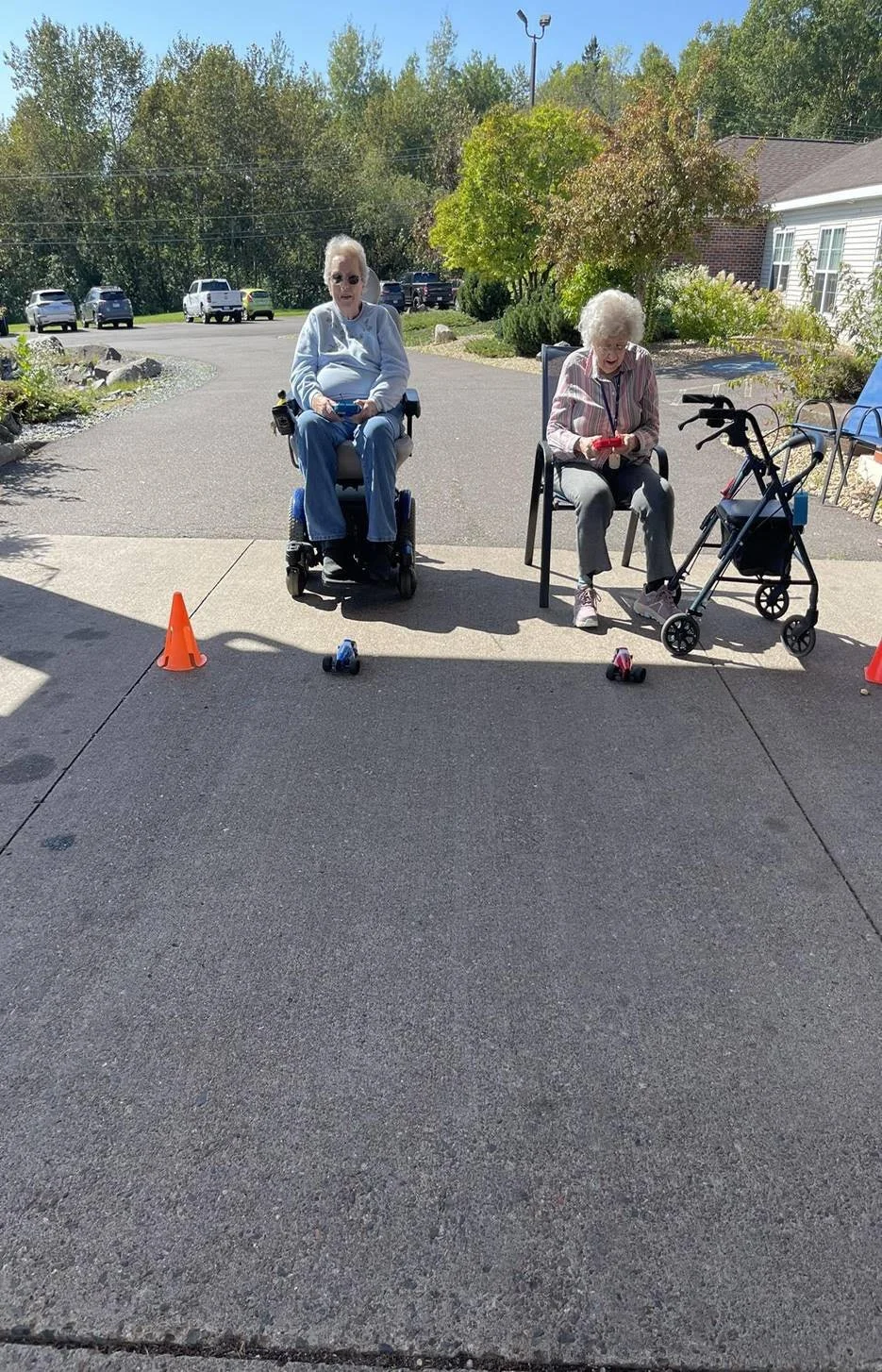
Standard four-legged walkers provide serious stability for individuals with significant balance problems. All four legs stay planted while the user steps forward, then the walker gets lifted and repositioned. This pattern works beautifully for short distances inside an apartment, but it's exhausting over longer spans.
The lifting motion requires upper-body strength that many seniors lack. Arthritis makes gripping and lifting painful. The stop-and-go rhythm feels unnatural and slow. For these reasons, standard walkers make the most sense for people with severe balance impairment who primarily need support for bathroom trips and moving around a small living space.
Rollators changed everything when they became widely available. Four wheels mean continuous forward motion. Hand brakes give users control over speed and stopping. The built-in seat transforms the device from pure support into genuine freedom.
What makes rollators particularly valuable:
Users can walk naturally without the exhausting lift-step-lift pattern.
The seat provides rest options that extend how far someone can travel.
Storage baskets or pouches carry personal items, books, or purchases.
Brake systems allow safe stops on any surface or incline.
Adjustable handles accommodate different heights and postures.
That seat function deserves emphasis. When someone knows they can sit down the moment they feel tired, they're willing to attempt longer trips. Attend the entire church service. Stay through the whole movie screening. Walk to the library and browse for twenty minutes. The psychological shift matters as much as the physical support.
Proper fitting makes the difference between helpful equipment and something that causes new problems. Handles should align with wrist height when arms hang naturally. Too high forces shoulder hunching. Too low creates back strain and poor posture. Most people adjust their walkers incorrectly and wonder why their shoulders hurt.
Our staff works closely with residents and therapists to ensure every mobility aid is fitted correctly and supports daily independence. Learn more about our personalized assisted living services.
Canes for People Who Need Less but Still Need Something
Single-point canes work when someone needs modest help with balance or wants to offload weight from one leg. They're light, portable, and far less cumbersome than larger equipment. But they only help if the balance problem is genuinely mild.
Too many seniors use canes when they actually need walkers. Pride plays a role. A cane feels less disabled, less old, less final. The problem is that an inadequate cane doesn't prevent falls. It just provides false confidence before someone hits the ground.
Quad canes sit in the middle ground. Four small feet create a stable base without the bulk of a walker. They're genuinely useful for people whose balance is compromised but not severely impaired. The wider footprint provides real support during weight transfers and turning movements.
Cane technique matters more than most people realize. The cane goes in the hand opposite the weak leg. It moves forward with the weak leg. This pattern creates a stable tripod of support during each step. Using the cane on the wrong side or moving it at the wrong time actually increases fall risk.
Handle design affects daily use significantly. Offset handles align the hand directly over the cane shaft, distributing weight more efficiently and reducing wrist strain. Ergonomic grips help people with arthritis maintain secure holds. These details seem minor until someone's using the equipment six hours every day.
Wheelchairs: When Walking Stops Being Practical
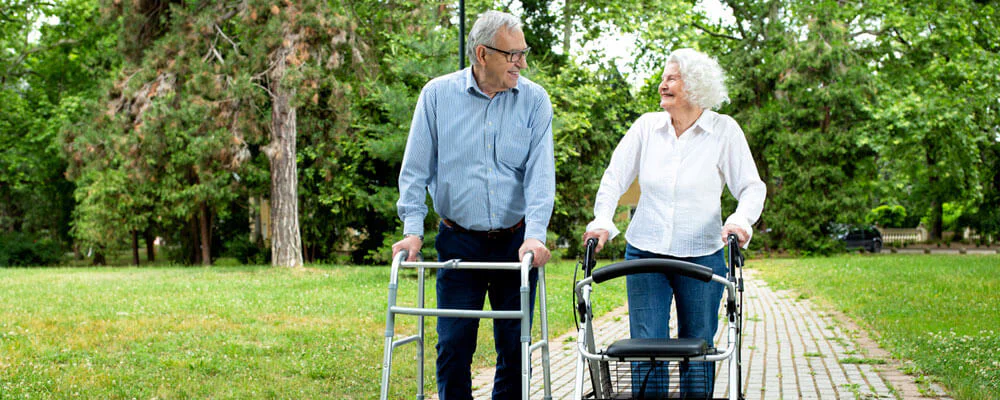
Some seniors can walk short distances but can't sustain it. Others have the balance and strength for movement inside their apartment, but not for longer community hallways. Wheelchairs fill these gaps without forcing someone to choose between participation and exhaustion.
Manual wheelchairs come in two basic categories that serve different purposes. Self-propelled models have large rear wheels that users can turn themselves. This preserves independence and autonomy. The person decides when to move, where to go, and how fast to travel. But self-propulsion requires decent upper body strength and cognitive ability to navigate safely around furniture and other people.
Transport wheelchairs are lighter and more compact because they're designed for pushing, not self-propulsion. The wheels are smaller. The frame weighs less. A family member or aide provides the movement. For seniors who can walk within their apartment but need wheels for trips to dining or activities, transport chairs make practical sense.
Key wheelchair considerations in assisted living settings:
Doorway width compatibility with apartment and bathroom entries
Turning radius for maneuvering in elevators and common areas
Seat width and depth for comfortable extended sitting
Footrest positioning that doesn't create tripping hazards
Weight capacity appropriate for the user's size
Cushioning that prevents pressure sores during extended use
We help residents select and adapt the right mobility solutions for their apartment and community spaces. Explore how our assisted living environment is designed for safe, comfortable movement.
Power wheelchairs offer precise indoor maneuverability through joystick controls. They navigate tight apartment layouts and crowded activity rooms effectively. The motors handle inclines that would exhaust manual wheelchair users. Battery range supports a full day of movement without recharging concerns.
Mobility scooters work differently. They're built for covering distance rather than tight maneuvering. The turning radius is wider. The footprint is larger. But for seniors who want to move around extensive community grounds or take outdoor excursions, scooters provide speed and range that wheelchairs can't match.
Choosing between manual, power, and scooter options requires honest evaluation. Can the person safely operate powered controls? Do they have the judgment to navigate around other residents? Will they actually use complex equipment, or will it sit unused because it's intimidating?
The Equipment Nobody Thinks About Until They Need It
Grab bars aren't glamorous, but they prevent more injuries than any other single intervention. Properly installed bars near toilets provide stability during the vulnerable transition from standing to sitting. Shower grab bars let people steady themselves on wet, slippery surfaces where falls cause the worst damage.
Toilet risers reduce the distance someone has to lower themselves, making the motion less strenuous and the return to standing far easier. For people with hip or knee problems, this simple height modification preserves bathroom independence.
Bed rails serve dual purposes in assisted living apartments. They prevent nighttime falls for people who shift position during sleep. More importantly, they provide leverage for getting in and out of bed independently. Pulling up on a secure rail engages upper-body strength that compensates for weak legs.
Transfer boards create bridges between surfaces at different heights. Moving from wheelchair to bed, bed to chair, or wheelchair to toilet becomes manageable when someone can slide across rather than stand and pivot. These work for people with adequate upper-body function who follow multi-step processes.
Smaller Aids That Maintain Daily Independence
Reaching tools extend someone's functional range without requiring bending or stretching that might cause falls. Retrieving dropped items, accessing high closet shelves, pulling clothes from dresser drawers. These simple tasks become dangerous when balance is poor. A reaching aid eliminates the risk.
Dressing aids that preserve dignity:
Sock aids for people who can't bend to their feet.
Long-handled shoe horns that eliminate bending
Button hooks for arthritic fingers
Elastic shoelaces that convert any shoe to a slip-on.
Dressing sticks for pulling up pants or positioning shirts
The psychological value of dressing yourself without help can't be overstated. It's the difference between feeling capable and feeling helpless. Between maintaining routine and surrendering control. These inexpensive tools deliver independence that far exceeds their modest cost.
Getting the Selection Right
Physical therapy evaluation eliminates guesswork. Therapists assess actual strength, balance, endurance, and cognitive function. They watch how someone moves, where compensation patterns exist, and which specific deficits need addressing. Then they recommend equipment that matches real needs instead of assumptions.
Many assisted living communities keep demo equipment that residents can trial. This hands-on testing in the actual environment reveals practical issues that showroom visits miss. The walker that seemed perfect might not fit through the bathroom door. The wheelchair might be too wide for the dining room table spacing. The scooter controls might be positioned awkwardly for someone with shoulder limitations.
Medicare covers medically necessary durable medical equipment when doctors prescribe it, and documentation supports the need. But coverage rules are specific, and requirements are strict. Working with suppliers who understand Medicare prevents denials and unexpected costs.
At Keystone Bluffs, residents trial mobility aids in real community settings with guidance from our team. Discover our continuum of care that includes equipment support and evaluations.
Maintenance Nobody Mentions
Mobility equipment breaks down. Wheels wear out. Brakes lose tension. Bolts work loose. Regular inspection catches problems before they cause injuries. Check walker wheels monthly for wear and debris buildup. Test brake function weekly. Tighten any loose hardware immediately.
Wheelchair maintenance demands more attention. Tire pressure affects rolling resistance and energy expenditure. Brake adjustment determines whether stops are controlled or sudden. Battery care for powered equipment directly impacts reliability and lifespan.
Cleaning matters for both hygiene and function. These devices touch bathroom floors, go under dining tables, and move through all community areas. Regular disinfection prevents disease transmission between surfaces and users.
Frequently Asked Questions
How do mobility aids support independence in assisted living?
Less effort on the body comes from using them, and stability gets better because of it. Moving around during everyday tasks becomes safer for older adults; they rely less on others that way.
Does someone tweak mobility tools when requirements shift down the road?
True. Mobility checks happen often, so equipment stays matched to how someone moves now. Changes come when needed, keeping things practical.
Could using walking frames slow someone down? Might wheelchairs keep people out of places they want to go?
Right picks open doors; easing strain, smoothing motion, keeping things going without wear on the body. Movement stays doable, feels better, lasts longer when the setup works. Day after day, it just fits.
Why This Actually Matters
Proper mobility aids for seniors determine whether someone participates in assisted living community life or withdraws into isolation. Without appropriate support, residents skip activities because walking there feels too risky or exhausting. They eat in their apartments instead of the dining room. They stop attending events. Their world shrinks.
With well-matched equipment, the opposite happens. Regular movement maintains muscle strength and cardiovascular health. Social engagement supports mental health and cognitive function. Independence preserves dignity and life satisfaction. The right mobility aids for seniors aren't just about preventing falls. They're about enabling the full, active life that makes assisted living worthwhile.
They're about helping residents stay active and engaged every day. See how we support this full, vibrant lifestyle at Keystone Bluffs by scheduling a personal tour.