

The benefits of socialization for seniors go far beyond small talk and group bingo. Regular social connection lowers the risk of dementia by roughly 50%, reduces depression, strengthens heart health, and can even extend lifespan. For introverted seniors, the key is not forcing more interaction. It is finding the right kind of interaction, one that feels comfortable, not draining.
About 1 in 4 adults aged 65 and older are considered socially isolated, according to the CDC. And a 2024 University of Michigan poll found that 33% of adults aged 50 to 80 reported feeling lonely at least some of the time. Those numbers are striking. But here is the thing most people miss: introversion and isolation are not the same thing. An introverted senior can be perfectly healthy and happy with fewer, deeper connections. The problem starts when even those small connections disappear.
This blog breaks down why socialization matters for quieter seniors, how it actually helps the brain and body, and what families (and communities) can do to support it without pushing too hard.
Understanding Introversion in Older Adults
Introversion is not shyness. It is not social anxiety. And it is definitely not a flaw that needs fixing.
Introverts recharge through quiet time alone. They tend to prefer one-on-one conversations over large group settings, and they often find small talk exhausting rather than energizing. According to psychology research, roughly 30 to 50% of the population leans introverted. That number does not shrink with age. If anything, many older adults become more inward-focused as they get older, even people who were outgoing in their younger years.
The challenge is that aging often removes the social structures introverts relied on. Retirement takes away daily coworker contact. Health issues limit mobility. Friends and spouses pass away. Suddenly, a person who was content with a small circle has no circle left at all.
And that shift from chosen solitude to forced isolation? That is where the health risks start climbing fast.
Key Benefits of Socialization for Seniors (Even Quiet Ones)
The research on this is detailed, and it keeps getting stronger. Here are the most important benefits of socialization for seniors, backed by current data:
Cognitive Protection
Seniors who maintain regular social contact show slower rates of cognitive decline. Studies have linked strong friendships and frequent social interaction to better performance on memory tests and a reduced risk of Alzheimer's disease. The brain needs stimulation, and conversation (even quiet, unhurried conversation) delivers it. Creative hobbies work the same way. Hands-on activities like crafts for seniors combine gentle brain stimulation with natural, shared interaction that does not feel forced.
Lower Risk of Depression
The National Institute on Aging connects social isolation with higher rates of depression among older adults. Depression in seniors often shows up differently than in younger people. It can look like irritability, low energy, sudden weight changes, or poor sleep. Regular connection, even brief and low-key, acts as a buffer against those symptoms.
Better Physical Health
This one surprises people. Social activity is linked to better immune function, lower blood pressure, and reduced inflammation. One reason? Positive social interactions reduce cortisol (the stress hormone). Another reason? Socially engaged seniors tend to move more. A walk with a friend still counts as a walk.
Longer Lifespan
Here is a stat that stops people in their tracks. Social isolation raises mortality risk by 26 to 29%, which is comparable to smoking about 15 cigarettes a day. That figure comes from the U.S. Surgeon General's 2023 advisory on social connection. It has not been revised down since. If anything, follow-up data continues to support it.
Emotional Resilience
Seniors with even a small support network handle grief, health setbacks, and life transitions better than those who face them alone. Connection builds a sense of purpose. And for introverted seniors, that connection does not have to come from a crowded activity room. It can come from one trusted friend over coffee.
How Introverted Seniors Can Socialize Without Feeling Overwhelmed
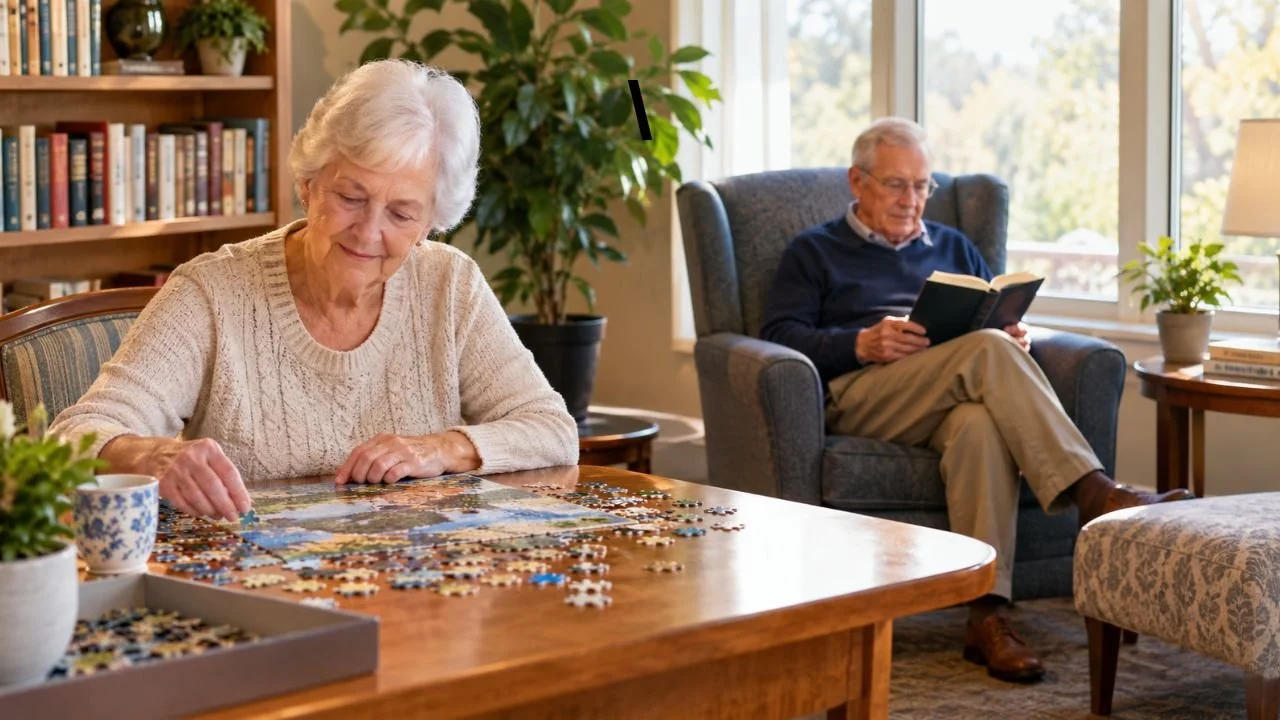
This is where most advice falls flat. Telling an introvert to "just get out there" is about as helpful as telling someone with a broken leg to "just walk it off." The approach has to match the personality.
Here are strategies that actually work for quieter seniors:
| Strategy | Why It Works for Introverts |
|---|---|
| One-on-one conversations | Deeper connection without the energy drain of group settings |
| Small hobby groups (book clubs, art classes, puzzle groups) | Structured activity gives a natural focus, so conversation flows without pressure |
| Shared meals with a few neighbors | Low-key, daily contact that builds familiarity over time |
| Nature walks or garden time with one companion | Movement plus connection in a calm, open environment |
| Letter writing or phone calls with family | Social contact on the introvert's own schedule and terms |
| Quiet common spaces (libraries, reading rooms, courtyards) | Presence without forced participation. Just being around others helps |
The pattern here is clear. Introverted seniors do not need more socializing. They need better socializing. Quality over quantity, every single time.
For seniors who also face physical limitations, there are plenty of activities for seniors with limited mobility that double as low-pressure social opportunities without requiring a packed calendar.
Signs a Senior Loved One Needs More Connection
Families often struggle to tell the difference between a parent who is happily independent and one who is quietly struggling. Here are some red flags worth watching for:
Withdrawing from activities they used to enjoy: Not just skipping one event, but a steady pattern of pulling back.
Changes in eating or sleeping habits: Isolation tends to disrupt both, sometimes in subtle ways.
Increased irritability or apathy: A parent who seems flat, disengaged, or unusually short-tempered may be lonely, not just aging.
Neglecting personal care or household tasks: When someone stops caring about their environment, the cause is often emotional, not physical.
Rarely mentioning other people: If a parent never talks about friends, neighbors, or social interaction of any kind, that absence says something.
These signs do not always mean crisis. But they do mean it is time to start a conversation. And for introverted seniors especially, that conversation should focus on what kind of connection would feel good to them, not what the family thinks they should be doing.
How Assisted Living Supports Introverted Seniors
There is a common worry that assisted living is nonstop social activity and that a quiet person will feel out of place. But modern communities are built differently than people expect.
Good assisted living environments offer private apartments where residents can retreat and recharge whenever they need to. That personal space matters enormously for introverts. It is their home base. At the same time, common areas like courtyards, reading nooks, and small dining rooms create natural opportunities for low-pressure interaction. Nobody is forced to participate. The option is just always there.
Activity programming in quality communities includes a range of formats. Large group events exist, sure. But so do small gatherings, creative workshops, and quiet spaces designed for two or three people to sit and talk. Staff members who understand personality differences can gently connect a resident with a compatible neighbor rather than dropping them into a 30-person game night.
The dining room is actually one of the most powerful social tools in assisted living. Sharing a meal with a few familiar faces, day after day, builds the kind of slow, steady familiarity that introverts thrive on. No forced icebreakers. No pressure to perform. Just presence.
For families exploring senior living options in Duluth, MN, Keystone Bluffs offers 80 private apartments on a single floor, along with courtyards, activity rooms, and fine dining, all designed so residents can choose their level of engagement each day. Schedule a tour to see how the community supports both connection and independence.
Frequently Asked Questions
Q: Can socialization really help prevent dementia in seniors?
Yes. Research from the CDC and the National Academies of Sciences shows that social isolation raises the risk of dementia by approximately 50%. Regular social contact, even in small doses, stimulates cognitive function and helps protect memory over time.
Q: How much socialization does an introverted senior actually need?
There is no universal number. But research suggests that even brief, meaningful interactions a few times per week can lower the risk of depression and cognitive decline. For introverts, one quality conversation often does more good than several surface-level group activities.
Q: What if my parent refuses to socialize at all?
Start small and start with their interests. If they love reading, suggest a two-person book discussion rather than a book club. If they enjoy nature, a short walk with one companion works well. Forcing socialization tends to backfire, especially with independent-minded seniors.
Q: Does assisted living work for people who prefer being alone?
Absolutely. Quality assisted living communities provide private living spaces alongside optional social opportunities. Residents choose when and how to engage. The structure actually helps introverts because connection is available without being required.